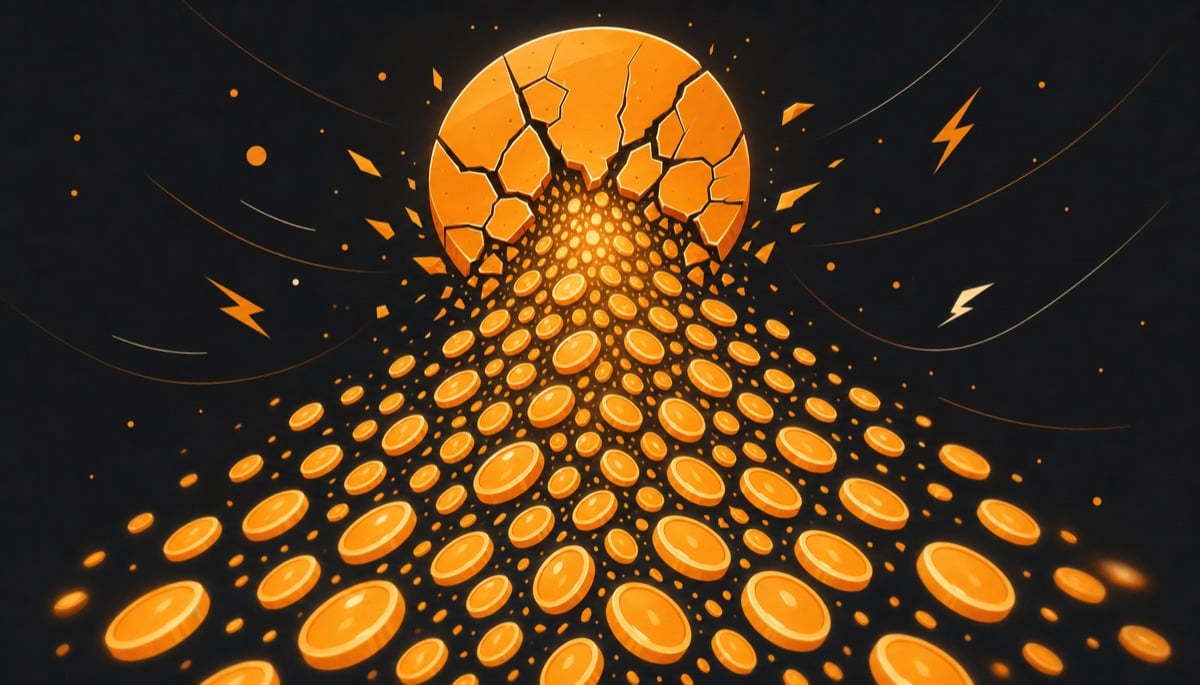
If you have spent any time around Bitcoin, you have probably seen prices quoted in strange little numbers: "this costs 500 sats," or "I earned 1,200 sats today." Those sats are satoshis, the smallest unit of Bitcoin, and they are the unit you will actually use day to day once you start sending, earning, and spending bitcoin over the Lightning Network.
This guide explains exactly what a satoshi is, how it relates to a whole bitcoin, why the unit matters for everyday transactions, and the practical, no-cost ways to get your first satoshis into a wallet you control. By the end you will understand the math, the terminology, and a clear first step you can take in the next few minutes.
What is a satoshi? A simple definition
A satoshi is the smallest unit of bitcoin that the Bitcoin network can record. One whole bitcoin (BTC) is divisible into 100,000,000 satoshis. In other words:
- 1 BTC = 100,000,000 satoshis
- 1 satoshi = 0.00000001 BTC
That is one hundred-millionth of a single bitcoin. The unit is named after Satoshi Nakamoto, the pseudonymous creator of Bitcoin, and it has been part of the protocol since the very beginning. People often shorten the word to "sat" (one sat) or "sats" (many sats).
Because a single bitcoin can be worth a large amount of money, the satoshi exists so that the network can handle tiny amounts of value precisely. You do not need to buy a whole bitcoin to participate. You can hold, send, and earn a handful of satoshis just as easily as someone holding a larger balance.
Why such a small unit exists
Bitcoin was designed as money for the internet, and money on the internet needs to handle both large and very small payments. If the smallest spendable amount were a whole coin, micropayments would be impossible. By building in eight decimal places of divisibility from day one, Bitcoin can represent everything from a major transfer down to a fraction of a cent.
This matters more as adoption grows. The smaller and more useful the unit, the easier it is to price everyday things, tip a creator, pay for a tiny slice of a service, or reward someone for a small action. Satoshis are the natural unit for all of that.
Satoshis vs. bitcoin: getting the mental model right
A common beginner mistake is thinking you need to own "a bitcoin" to use Bitcoin. You do not. Think of it the way you think of a dollar and a cent, except a satoshi is far smaller than a cent.
Here is a quick reference table to anchor the math:
| Amount in BTC | Amount in satoshis |
|---|---|
| 1 BTC | 100,000,000 sats |
| 0.1 BTC | 10,000,000 sats |
| 0.01 BTC | 1,000,000 sats |
| 0.001 BTC | 100,000 sats |
| 0.0001 BTC | 10,000 sats |
| 0.00001 BTC | 1,000 sats |
| 0.00000001 BTC | 1 sat |
When you see a balance like "2,500 sats," you can read it as 0.000025 BTC. Most modern wallets let you switch the display between BTC and sats with a single tap, and many people who use Bitcoin for everyday spending keep their wallet set to sats because the numbers are easier to read and reason about.
Where the Lightning Network fits in
You will hear "satoshis" and "Lightning" mentioned together constantly, so it helps to understand the link. The base Bitcoin blockchain is excellent for settlement and security, but on-chain transactions carry a network fee and take time to confirm. That makes sending a few hundred satoshis on-chain impractical, because the fee could be larger than the amount you are sending.
The Lightning Network is a second layer built on top of Bitcoin that lets you send satoshis instantly and with extremely low fees. It is purpose-built for small, fast payments. This is why almost everything denominated in sats, from tipping to earning to playing games, happens over Lightning. When you receive satoshis from a faucet or earn them from an activity, they typically arrive in your Lightning wallet in seconds.
If you are brand new to all of this, the one-sentence summary is: satoshis are the unit, Lightning is the fast rail that moves them.
How to get your first satoshis
There are several legitimate ways to acquire satoshis. They fall into a few broad categories, and you can mix and match them depending on whether you want to spend money, spend time, or simply learn by doing.
1. Buy them from an exchange or service
The most direct route is to buy bitcoin with regular money through a reputable exchange or a Bitcoin-friendly service, then withdraw to a wallet you control. You do not have to buy a whole coin; you can buy any amount, and that amount will be denominated in satoshis in your wallet. This is the standard path for people who want a larger balance quickly.
The trade-off is that it requires spending money and usually some identity verification. If you just want to get your hands on a few satoshis to learn how sending and receiving works, you do not need to start here.
2. Earn them from a Bitcoin faucet
A Bitcoin faucet is a service that gives out small amounts of satoshis for free, usually in exchange for a simple action like claiming on a timer, completing a task, or playing a game. Faucets exist precisely to solve the "I have a wallet but no sats" problem that every newcomer hits. They are one of the oldest and friendliest on-ramps in Bitcoin.
Lightning Faucet is a Bitcoin and Lightning faucet of exactly this kind. You can claim free satoshis, and there are additional surfaces to earn and play with the sats you collect. The free spin is a simple, no-deposit way to get started, and the broader earn surfaces let you stack more sats over time. Because everything is denominated in satoshis and settled over Lightning, it is also a hands-on way to learn how the unit and the network actually feel in practice.
3. Get paid in satoshis
Once you understand the mechanics, you can ask to be paid in satoshis for work, content, or services. Many people in the Bitcoin community accept Lightning payments, and an increasing number of platforms support paying contributors directly in sats. If you build software, write, design, or run a small service, accepting Lightning is a practical way to accumulate satoshis as part of your normal income rather than as a separate activity.
4. Receive tips and rewards
Lightning makes tiny payments viable, which has made satoshi tipping common across the Bitcoin world. Creators receive tips in sats, communities reward helpful members, and some apps hand out sats as rewards for engagement. None of these will make you wealthy on their own, but they are an easy and genuinely free way to see satoshis arrive in your wallet and to practice receiving payments.
5. Play sat-denominated games and markets
Because satoshis are so divisible and Lightning settlement is so fast, sat-denominated games and markets have become a popular way to put small amounts of value to work. On Lightning Faucet you can try multiplayer poker against real players, take a position in prediction markets on real-world outcomes, or explore classic casino games like roulette, dice, and blackjack. These are entertainment-first surfaces, and the key beginner takeaway is the same either way: they make the satoshi feel real and teach you how Lightning balances move.
Setting up a wallet to hold your satoshis
Before you can receive satoshis, you need somewhere to put them. A Lightning wallet is an app or service that can send and receive payments over the Lightning Network. There are two broad types:
Custodial wallets
A custodial wallet holds the keys on your behalf. These are the easiest to start with: you download an app, and you can usually receive your first satoshis within minutes without any complicated setup. The trade-off is that you are trusting the provider to hold your funds, much like trusting a bank.
Self-custodial wallets
A self-custodial (non-custodial) wallet puts you in charge of your own keys. Nobody can freeze or move your funds but you, which is the core promise of Bitcoin. The trade-off is responsibility: if you lose your backup, nobody can recover it for you. Many people start custodial to learn the ropes, then graduate to self-custody as their balance and confidence grow.
Whichever you choose, the satoshis you receive will be displayed in your wallet's balance, and you can switch the display between sats and BTC in most apps.
A quick word on backups
If you use a self-custodial wallet, write down your recovery phrase (also called a seed phrase) and store it somewhere safe and offline. This phrase is the only way to restore your funds if your phone is lost or broken. Treat it like cash: anyone who has it can take your satoshis, and if you lose it, the satoshis are gone. This single habit prevents the most common and most painful beginner mistake.
How satoshis are used in everyday Bitcoin
Once you have some satoshis, what can you actually do with them? More than you might expect:
- Send and receive payments. Pay another person or a merchant instantly over Lightning, often for a fee of a fraction of a satoshi.
- Tip creators. Reward writers, podcasters, developers, and artists directly, with no minimum that makes it awkward.
- Buy digital goods and services. A growing number of apps and services price small purchases in sats.
- Save. Some people simply accumulate satoshis over time, treating them as long-term savings denominated in Bitcoin.
- Play and explore. Try sat-denominated games, markets, and earn surfaces to learn how the unit behaves in real time.
The common thread is that satoshis turn Bitcoin from an abstract, all-or-nothing asset into a flexible, everyday unit you can actually use.
Common mistakes beginners make with satoshis
A few avoidable errors trip up almost everyone at the start:
- Thinking you need a whole bitcoin. You do not. You can hold and use a few hundred satoshis perfectly well.
- Confusing the units. Always check whether a balance or price is in BTC or sats. The difference is a factor of 100 million, so misreading it is a big deal.
- Ignoring backups. If you go self-custodial, back up your recovery phrase before you receive anything meaningful.
- Sending tiny amounts on-chain. For small sat amounts, use Lightning, not the base chain, or the network fee may exceed what you are sending.
- Treating learning funds as an investment. Free satoshis from a faucet are a great way to learn. Keep your expectations grounded: the value is the hands-on practice, not getting rich.
A practical first step
If you want to actually feel how this works rather than just read about it, the fastest path is to set up a Lightning wallet and collect a few satoshis from a faucet. Lightning Faucet is built for exactly this moment. Claim a free spin to get your first sats, then explore the earn surfaces and sat-denominated games to see how the unit moves over Lightning. Within a few minutes you will have gone from reading about satoshis to holding them, which is the best possible way to learn.
Frequently asked questions
How many satoshis are in one bitcoin?
There are exactly 100,000,000 satoshis in one bitcoin. Put another way, one satoshi is one hundred-millionth of a bitcoin (0.00000001 BTC). This divisibility has been part of the Bitcoin protocol since it launched, which is why you can hold and send tiny amounts precisely.
Is a satoshi the same as a bitcoin?
No. A satoshi is the smallest unit of a bitcoin, not a separate coin. They are the same currency at different scales, the way a cent is a small unit of a dollar. The key difference is that a satoshi is far smaller than a cent: it takes 100 million satoshis to make one whole bitcoin.
Can I get satoshis for free?
Yes. Bitcoin faucets give out small amounts of satoshis at no cost, usually in exchange for a simple action like claiming on a timer or playing a game. You can also receive satoshis as tips or rewards. Free satoshis are an excellent way to learn how sending and receiving works without spending any money, though the amounts are intentionally small.
Do I need a special wallet to receive satoshis?
You need a Bitcoin wallet that supports the Lightning Network, since most satoshi-sized payments travel over Lightning for speed and low fees. Many wallets support both Lightning and on-chain Bitcoin. Custodial wallets are the easiest to start with, while self-custodial wallets give you full control of your own keys in exchange for managing your own backup.
Why are payments measured in satoshis instead of bitcoin?
Because a whole bitcoin can represent a large amount of value, quoting everyday prices in BTC produces awkward decimals like 0.00001500. Quoting the same amount as 1,500 sats is far easier to read and reason about. As people use Bitcoin for smaller, everyday payments, satoshis have become the more natural unit, which is why so many wallets and services display balances in sats.
What is the difference between sending satoshis on-chain and over Lightning?
On-chain transactions are recorded directly on the Bitcoin blockchain. They are highly secure but carry a network fee and take time to confirm, which makes them impractical for very small amounts. The Lightning Network is a second layer that settles small payments instantly and with negligible fees, so it is the right choice for moving a handful of satoshis. For larger transfers or long-term storage, on-chain is common; for everyday sat-sized payments, Lightning is the standard.
---
By the Lightning Faucet team.