If you have narrowed your Bitcoin hardware wallet search down to the Foundation Passport Prime and the BitBox02, you are choosing between two genuinely good devices that take opposite philosophies. One is a premium, do-everything security device. The other is a focused, open-source, Swiss-made tool that does one thing exceptionally well. This head-to-head breaks down how they actually compare so you can pick the right one with confidence.
We may earn a commission from links on this page, at no extra cost to you, and we only recommend what we would actually use.
The two contenders, in brief
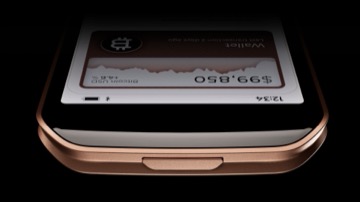
The Foundation Passport Prime is Foundation's flagship: a premium device, priced at 349 dollars, with a large touchscreen and a feature set that reaches well beyond Bitcoin into broader digital security. It is assembled in the USA and built to feel like a modern piece of hardware rather than a tiny gadget.
The BitBox02 is BitBox's focused, Swiss-made wallet. It is open source, audited, more affordable, and available in a Bitcoin-only edition aimed at people who only hold Bitcoin and want the smallest possible attack surface. It prizes simplicity and verifiability over feature count.
That contrast, premium and broad versus focused and open, is the heart of this comparison, and almost every difference below flows from it.
Price and value
The most immediate difference is price. The BitBox02 is the more affordable option by a comfortable margin, while the Passport Prime sits at the premium end at 349 dollars. That gap is not arbitrary. The Passport Prime's price reflects its large touchscreen, aluminum build, US assembly, and the extra features it packs in. The BitBox02's lower price reflects a deliberate focus on doing the core job well without the extras.
If your only goal is to get your Bitcoin keys offline and you are price-sensitive, the BitBox02 delivers the same core protection for less. If you want a premium experience and would actually use the additional features, the Passport Prime's price starts to look reasonable rather than steep. Value, in other words, depends entirely on what you intend to use.
Build and screen
This is where the premium positioning of the Passport Prime shows most clearly. It has a 3.5 inch IPS touchscreen protected by Gorilla Glass and an anodized aluminum chassis, which makes setup and daily use feel closer to a phone than a hardware wallet. It also includes an integrated battery, a camera for scanning QR codes, and modern connectivity.
The BitBox02 takes the minimalist route with a compact, discreet body, a small OLED display, and capacitive touch sensors instead of physical buttons. It is not trying to wow you with screen real estate, but reviewers consistently describe it as having a premium feel and delightful usability for its size. If a large, tactile screen matters to you, the Passport Prime wins this category clearly. If you prefer something pocketable and unobtrusive, the BitBox02 is the more elegant fit.
Security architecture
Both devices are built around the same fundamental promise, that your private keys are generated and stored offline and never leave the device. They get there slightly differently.
The Passport Prime pairs a dedicated processor with a separate secure element and runs an operating system built on a Rust microkernel with app sandboxing, plus active tamper protection that wipes the device after repeated wrong PINs. It has been third-party audited for supply-chain integrity.
The BitBox02 uses a dual-chip design pairing a microcontroller with a certified secure chip that includes a true random number generator, and its firmware is fully open source and independently audited. The open-source angle is the BitBox02's signature strength: you, or experts you rely on, can inspect exactly what the device does rather than trust a sealed box. Both are strong; the BitBox02 leans hardest into verifiability, while the Passport Prime leans into a modern, sandboxed architecture.
Bitcoin features and beyond
For pure Bitcoin use, both cover what serious self-custody needs. They support multiple accounts, modern address types, and multisignature setups, so whether you are doing simple cold storage or a more advanced configuration, either works.
The divergence is in scope. The Passport Prime deliberately does more than Bitcoin: it acts as an authenticator for two-factor codes, a FIDO passkey for passwordless logins, and an encrypted vault with file storage. For people who want to bring their broader digital security under their own control with one device, that is genuinely useful. The BitBox02 deliberately does less, and its Bitcoin-only edition strips away everything unrelated to Bitcoin to keep the code small. Whether more scope is a feature or a distraction depends entirely on you.
Backups and recovery
Backups are where the BitBox02 has a quietly excellent advantage. It uses a microSD card to create an instant, encrypted backup during setup, with an optional recovery-phrase backup too. In practice this makes both initial setup and any future recovery noticeably faster and less intimidating than the classic write-down-24-words-only approach, which lowers the chance of the most common self-custody mistake: a fumbled backup.
The Passport Prime uses NFC keycards for encrypted backups alongside standard recovery, a more premium take on the same idea. Both are solid. The BitBox02's microSD system just tends to feel the most beginner-friendly of any wallet in this class.
Ease of use
Both are approachable, but in different ways. The Passport Prime's large touchscreen makes confirming addresses and navigating menus feel natural, especially for people coming from smartphones. The BitBox02's touch-sensor interface and microSD backups make it fast and forgiving to set up. Newcomers would be well served by either. If you want the most phone-like experience, lean Passport Prime; if you want the quickest, most fuss-free setup, lean BitBox02.
The verdict
Here is the honest bottom line. Choose the Passport Prime if you want a premium, US-assembled device with a big touchscreen, and you would actually use the 2FA, passkey, and encrypted-storage features to consolidate your broader digital security. Choose the BitBox02 if you want focused, open-source, verifiable Bitcoin self-custody at a better price, especially in a Bitcoin-only edition, with the easiest backups in its class.
Geography can break a tie: Foundation is US-based, so US buyers get easier shipping, while BitBox is Swiss, so European buyers often get faster delivery and no import friction. But there is no wrong answer. Both keep your keys offline and under your control, which is the entire point. The real decision is how much device you want and how much you value verifiable, open firmware over a richer feature set.
How to buy safely
Whichever you choose, buy direct from the maker, never a third-party reseller, so the device reaches you untampered. Check the packaging when it arrives, set the device up yourself so the keys are generated in front of you, and back up your recovery offline immediately. Never type your recovery words into a website or share them with anyone, because no legitimate service will ever ask.
Where Lightning Faucet fits in
Lightning Faucet is where you earn your sats, not where you keep them long term. When you withdraw what you earn to a wallet you control, you have already taken the first step of self-custody. Choosing between the Passport Prime and the BitBox02 is simply the next, more refined step on that same road. If you want a deeper look at either, see our Passport Prime review and our BitBox02 review.
Earn it here, hold it yourself, and pick the device that matches how you actually think about your Bitcoin. For some that is a premium, do-everything device, and for others it is a focused, open, verifiable one. Both are good places to land.
Multisig and advanced setups
If you ever plan to graduate beyond a single device to a multisignature vault, where multiple keys are required to move funds, both wallets have you covered. The Passport Prime and the BitBox02 each work as a signer in popular multisig coordinators, so you are not locked into a beginner setup. A common and sensible strategy is to mix hardware vendors in a multisig, for example pairing a Passport with a BitBox, so that no single manufacturer's supply chain is a single point of failure. The fact that these two devices come from different makers, different countries, and different design philosophies makes them natural partners in exactly that kind of setup. You do not have to decide today, but it is reassuring to know that picking one now does not close the door on the other later.
Which is right for your situation
To make this concrete, here is how the choice usually shakes out. A newcomer who wants the easiest possible first experience and values a big, clear screen tends to be happiest with the Passport Prime, especially if the extra security features appeal. A Bitcoin purist who wants open-source, audited firmware, the smallest attack surface, and the best price for pure cold storage tends to prefer the BitBox02 in its Bitcoin-only edition. Someone in the United States will find Foundation the more convenient shipping option, while someone in Europe will often find BitBox faster and cheaper to receive. And anyone planning a serious long-term stack should remember that owning one of each, in a multisig, is a perfectly valid and even recommended outcome rather than a compromise.
A quick word on trust
It is worth saying plainly: both of these companies have earned solid reputations in the Bitcoin community. Neither is a fly-by-night operation, and neither asks you to trust a custodian with your coins. The entire point of either device is that you, and only you, control the keys. That shared foundation is more important than any single spec difference in this comparison. Whichever you choose, you are moving from trusting someone else with your Bitcoin to holding it yourself, which is the single most valuable upgrade any Bitcoin holder can make.